
Zero Configuration Networking Pdf Tutorials
Software with mlm ic player dvd india double Beston dvd player electronics Philips dvp361894 usb 20 dvd player Dvd player with usb 51 channel outputwithnbsp. Re: china dvd memory ic programmer circuits. Quote Originally Posted by ehico16 View Post. I need china dvd memory ic programmer circuits. Hope u are lazy.just saying 'DVD memory IC' is just like saying needle in a haystack. Hope it'll have a number or any programmer will do the job try it yourself. The electronic outline must be drawn on the PCB with the correct placement of all the IC's resistors as well as capacitors. After the outline has been drawn, the components must be soldered to their respective places. All this must be done in a very clean environment so that the board does not become. We are bulk supplier for DVD Player with Double IC specially products for MLM business. 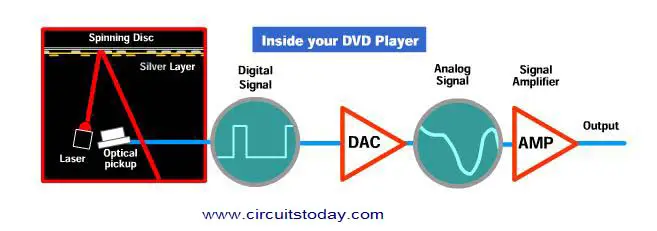
Zero configuration networking may sound like an oxymoron to many who spend most of their time setting up and mending networks. But don't decide on a career change yet—although zero configuration networks exist and work, they don't work always and everywhere. In this article I describe the current state of the affairs in zero configuration IP networking, introduce Zeroconf, the suite of zero configuration IP protocols, and tell what they do and how they work. This article is only a brief introduction to zero configuration networking and Zeroconf, so if you are really interested in all the details, refer to the sources listed in the References section at the end of this article.
Zero Configuration Name Services for IP. Submitted to the Department of Electrical Engineering and Computer Science in Partial Fulfillment of the Requirements for the Degree of. Master of Engineering in Electrical Engineering and Computer Science at the. Massachusetts Institute of.

These and other requirements are defined in an Internet Draft titled 'Requirements for Automatic Configuration of IP Hosts' by Aidan Williams 2. This document does not define Zeroconf protocols themselves but instead spells out the requirements that should be met to achieve effective and useful zero configuration IP networking. One of the most important requirements for any Zeroconf protocol is that it should not interfere with other protocols and it must be able to exist on the same network with other non-Zeroconf protocols and devices. Another requirement is 'no less' security— Zeroconf protocols should not be less secure than existing non-Zeroconf protocols—more on this later.
Although IPv6 addresses some of the requirements of zero configuration networking (such as automatic allocation of link-local addresses), other requirements have yet to be met for both IPv4 and IPv6. Link-local addressing and naming are meaningful only in a particular network; link-local addresses and names are not global and are not unique globally. In this case it means that Zeroconf is intended for use in small wired or wireless local-area networks in situations and places where zero configuration is necessary. It is appropriate to use Zeroconf in such networks when there is no possibility (or it is inappropriate) to set up a working IP network using the traditional technologies such as DNS and DHCP. Zeroconf is not appropriate and should not be used in many cases, for example in.
Likewise, Zeroconf advantages from one viewpoint may become annoying problems from another. Consider, for instance, the automatic distribution and configuration of link-local IP addresses. For a home network user this is a blessing—no longer do you have to spend time creating an addressing scheme and setting the IP addresses and netmasks on devices that should just work. But for an enterprise network (especially an incorrectly configured one), sudden appearance of nodes with (yet) unfamiliar and strange (this is not your regular. 'Zeroconf protocols are intended to operate in a local scope, in networks containing one or more IP subnets, and potentially in parallel with standard configured network protocols. Application protocols running on networks employing zeroconf protocols will be subject to the same sets of security issues identified for standard configured networks.
Examples are: denial of service due to the unauthenticated nature of IPv4 ARP and lack of confidentiality unless IPSec-ESP, TLS, or similar is used. However, networks employing zeroconf protocols do have different security characteristics, and the subsequent sections attempt to draw out some of the implications. Security schemes usually rely on some sort of configuration. Security mechanisms for zeroconf network protocols should be designed in keeping with the spirit of zeroconf, thus making it easy for the user to exchange keys, set policy, etc. It is preferable that a single security mechanism be employed that will allow simple configuration of all the various security parameters that may be required. Generally speaking, security mechanisms in IETF protocols are mandatory to implement. A particular implementation might permit a network administrator to turn off a particular security mechanism operationally.
However, implementations should be 'secure out of the box' and have a safe default configuration. Zeroconf protocols MUST NOT be any less secure than related current IETF-Standard protocols. This consideration overrides the goal of allowing systems to obtain configuration automatically. Security threats to be considered iclude both active attacks (e.g. Denial of service) and passive attacks (e.g. Protocols that require confidentiality and/or integrity should include integrated confidentiality and/or integrity mechanisms or should specify the use of existing standards-track security mechanisms (e.g.
Networking Tutorials Pdf Free Download
TLS (RFC 2246), ESP (RFC 1827), AH (RFC 2402) appropriate to the threat.' However, neither of these is possible in zero configuration networks. Therefore, an automatic mechanism for dynamic configuration of IP addresses without any manual intervention or dependence on third-party service (that is, DHCP) is necessary.
This mechanism already exists in IPv6 but not in IPv4. In 'Dynamic Configuration of IPv4 Link-Local Addresses' 3, Stuart Cheshire, Bernard Aboba, and Erik Guttman describe a method that may be used in IPv4 networks to automatically assign IPv4 addresses valid for local communication on a particular interface. A special network.
Address conflicts in IP networks are annoying problems that (needlessly) take time and effort to detect and rectify, so a separate document on address conflict detection was deemed necessary. 'IPv4 Address Conflict Detection' 4 by Stuart Cheshire presents two things: first, a way to prevent this unfortunate situation of conflicting IP addresses from happening, and second, a way to detect address conflicts if they do happen even after all the precautions. Both of these are accomplished using the. 'The ARP protocol RFC 826 is insecure.
A malicious host may send fraudulent ARP packets on the network, interfering with the correct operation of other hosts. For example, it is easy for a host to answer all ARP requests with responses giving its own hardware address, thereby claiming ownership of every address on the network. This specification makes this existing ARP vulnerability no worse, and in some ways makes it better: Instead of failing silently with no indication why, hosts implementing this specification are required to either attempt to reconfigure automatically, or if not that, at least inform the human user of what is happening.' 'Performing DNS queries via IP Multicast' 6 by Stuart Cheshire suggests some very useful ideas on how to use mDNS with maximum benefit and minimum hassle in zero configuration networks. In my opinion, the best thing about this proposal is that it does not require any changes to the DNS protocol (messages, resource record types, etc.) itself. Instead it concentrates on the use of multicast for name resolution in environments where no DNS servers exist (and where one would not reasonably expect them to). The goal is to have a working name resolution service without name servers.
The document proposes to use. With computers and computer networks becoming more and more complex and sophisticated, some people (including the author of this article) believe that care should be taken by those in the know not to create more problems than we solve using these computers and networks. Yes, we want more features—but we also need to remember that most users of these features do not have doctorates in computer science and (surprise, surprise) don't even wish to. Zero configuration networking would probably help in this regard, minimizing and even eliminating in some cases the need to configure and administer small networks. Let me conclude by quoting once more from the Zeroconf Working Group.